
On some days a snide comment rolls right off you. On other days, the same comment ruins your afternoon. The difference isn't the comment. It's how much room your nervous system had that day.
Dan Siegel coined the term window of tolerance for that room: the range of feeling and activation you can be in and still think, feel, and respond without being overwhelmed.
In plain terms, your window is your capacity to survive your own feelings without being derailed by them. It's also what lets you make hard choices and stick with hard things.
The window widens gradually over a lifetime (a baby needs soothing almost constantly; an adult, ideally, far less). Trauma can narrow it again.
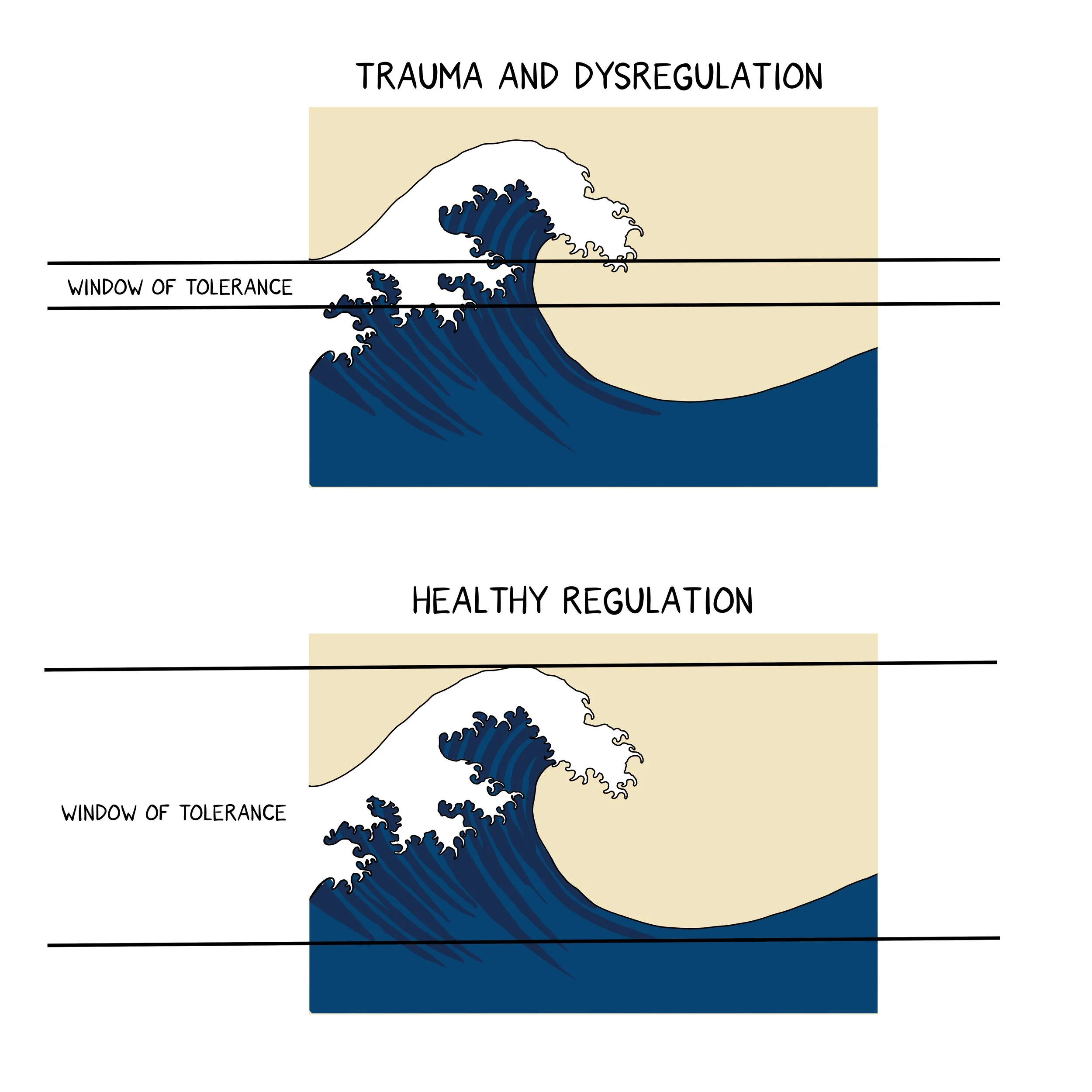
How wide your window is depends on both nature and nurture. On the nurture side, it's largely shaped by how well your early environment supported you. If support was thin or variable, your nervous system learned to expect danger and set your window narrow in order to stay alert. That can look like being easily triggered, running a low hum of anxiety, or living with moods and body symptoms that seem to come from nowhere. Later traumas (car accidents, illness, breakups, big setbacks) can be more likely when the window is narrow and can further decrease the window.
On the nature side, highly sensitive people (HSPs, a term coined by Elaine Aron) start with a narrower window than less sensitive types. Their sensory dials are turned up and they can be more easily overstimulated. They are therefore more affected by harsh environments and relationships, which can further narrow their window. Thankfully, sensitive people can widen their window a great deal through somatic practices, though they may always need to steward their sensitivity with good boundaries and self-care. It should be noted there are many positive aspects to being an HSP, such as artistic and intellectual abilities!
Once you understand the window, you'll start to see it everywhere: in yourself, your partner, your kids, your boss.
Thankfully, we can all work on our window through somatic practices and by exposing ourselves to hard things and making space for the feelings that come.
If you want a helping hand with this work, we offer free consultations.
Somatic Practice (2 mins)
In just two minutes, this practice invites you to tune in and radically accept everything that you find inside.
To learn how trauma can narrow your window over time, and how it can widen again, read How trauma affects your window of tolerance over time.