
Your window is the blue zone where you feel safe enough to think clearly and respond flexibly. Too much perceived danger pushes you out of it.
Above the window, in the red zone, you're revved up in fight or flight: fear, anger, frantic energy. Below the window, in the grey zone, you're down in freeze or collapse: depression, exhaustion, shame.
A common sequence of trauma goes like this:
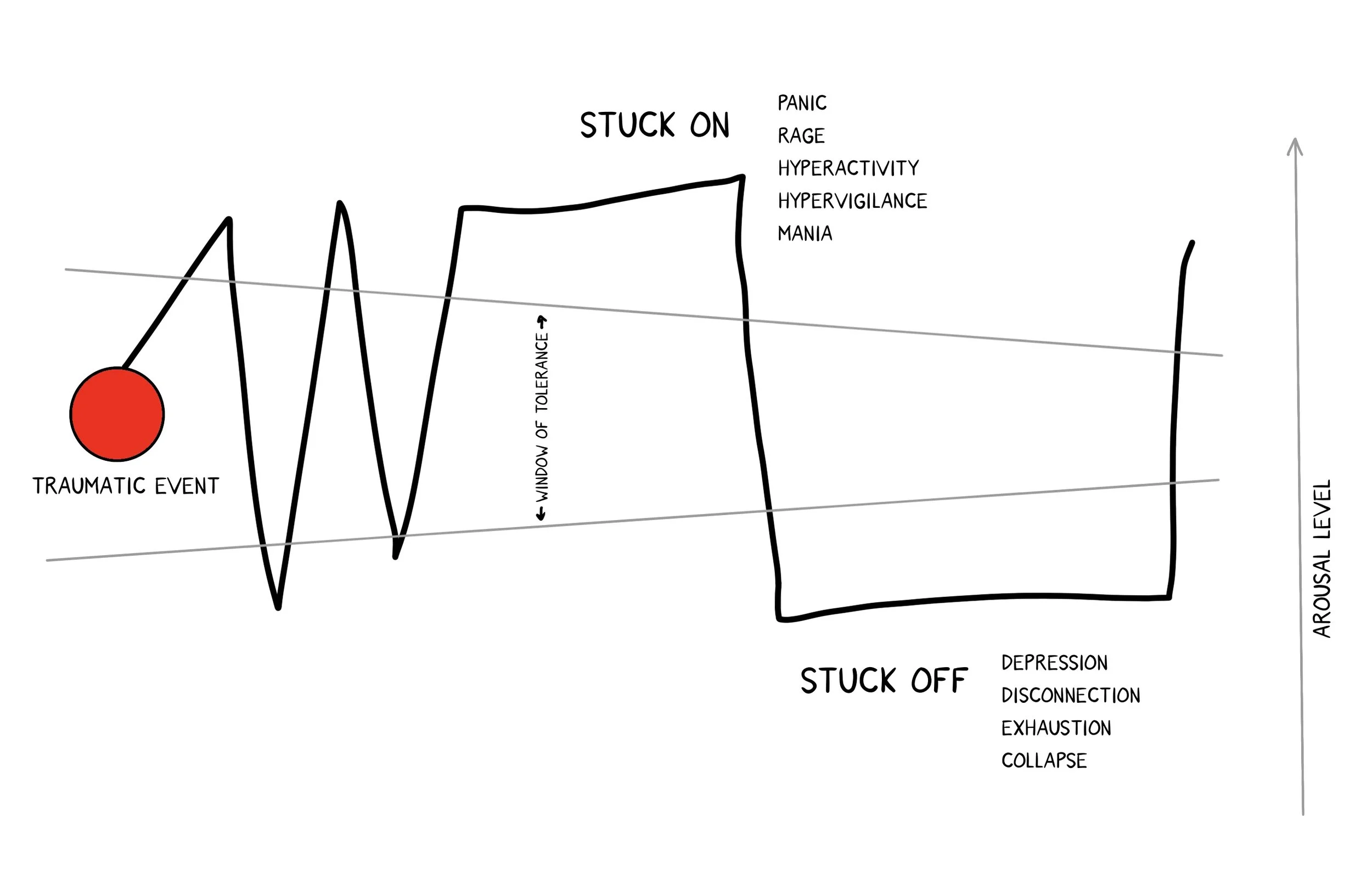
Something bad happens. It overwhelms you and knocks you outside your window. Because you're outside it, you can't fully process the event, so the brain files it away as raw unprocessed sensory data. Later, something triggers that material, which pulls you straight back into danger and overwhelm. Each time this happens, your window shrinks a little and the world feels a little more dangerous.
At first, the nervous system usually floods you with energy to meet the danger, pushing you above your window. If the raw material keeps getting triggered (your own thoughts will do it), the system can get stuck on. The survival energy never gets to discharge.
Eventually the energy exhausts you and the system collapses into stuck off. People who have lived with serious trauma for many years are usually stuck off most of the time.
One more wrinkle. Whatever threat response was available to you as a child tends to become your default. If you could fight back or run, you're more prone to become stuck on (fight or flight). If you were often trapped and powerless, you're more prone to become stuck off (freeze or collapse).
But what if you could go back and process the original event, say in somatic therapy?
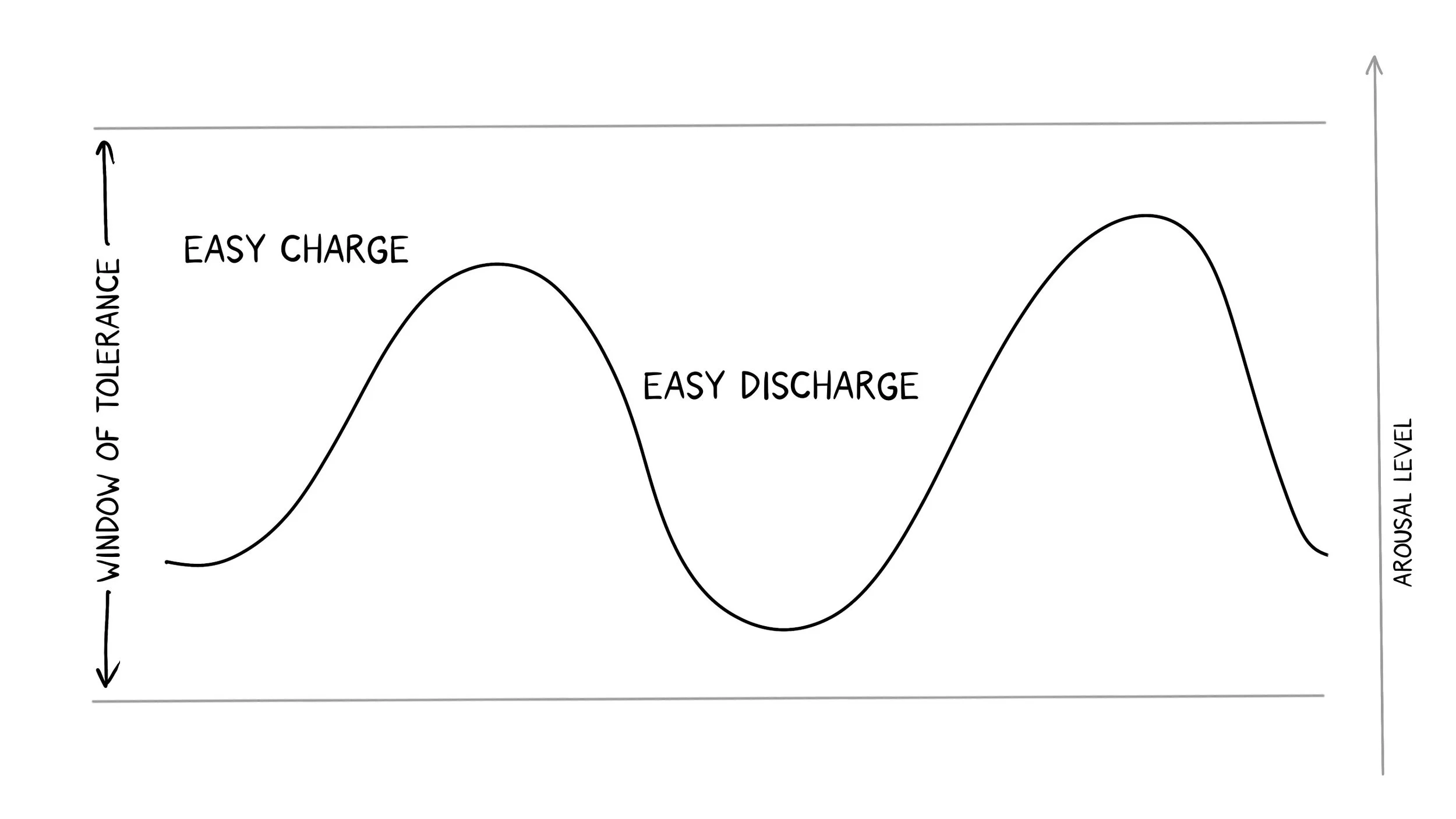
Processing the original trauma takes the charge out of your triggers. Your window widens, and life's ups and downs stop knocking you out of your window so easily. Your system gets stuck far less often, and when it does, you know how to nudge it back.
There's a bonus, too. Having faced something big, you've shown yourself what you can handle. It now takes something bigger to knock you out of your window.
Practice: Making a long, low “voo” sound vibrates the chest and belly and wakes up the parasympathetic system, the part of you that settles. Peter Levine, the founder of Somatic Experiencing, does it with clients in nearly every session.
New to the window of tolerance? Start with What Is the Window of Tolerance? to learn what it is and what shapes it. If you’d like support processing difficult experiences, you can schedule a free consultation with one of our somatic therapists.