
Some days you can handle anything. Other days, the smallest thing sends you spinning. Sometimes you feel wired and on edge, and sometimes flat and far away. That’s your nervous system at work, and once you understand it, you can start working with it.
The whole point of this work is to feel better, so let’s get specific about what that means. Your nervous system is always in one of three activation zones.
The Red Zone, above the window, is where too much energy is running through our system and we feel triggered, anxious, angry, tense, reactive, or stressed. Our body is reacting to a perceived danger by providing us with excess energy. If we stay in this zone too long, we deplete our resources and build up underground symptoms that we will only discover later.
The Grey Zone, below the window, is also triggered by perceived danger, but here our system has shut down to conserve energy. We feel numb, frozen, dissociated, withdrawn, powerless and exhausted. The deeper we go into this zone, the harder it can be to come out of it.
And lastly, the Blue Zone is where we are within our window of tolerance. This means we are calm, present, “dropped in”, at ease, creative and available for emotional connection. Our energy is flowing and our digestion and immune functions are active. There are no deferred symptoms. We are processing information in real time and we feel alive and human.
Fun fact: “Blue zones” are also the name for regions of the world where people live unusually long lives (100+). The overlap is fitting. Many of the everyday rituals in these places (shared meals, walking, community, rest) are exactly the kind that help keep a body in the blue zone.
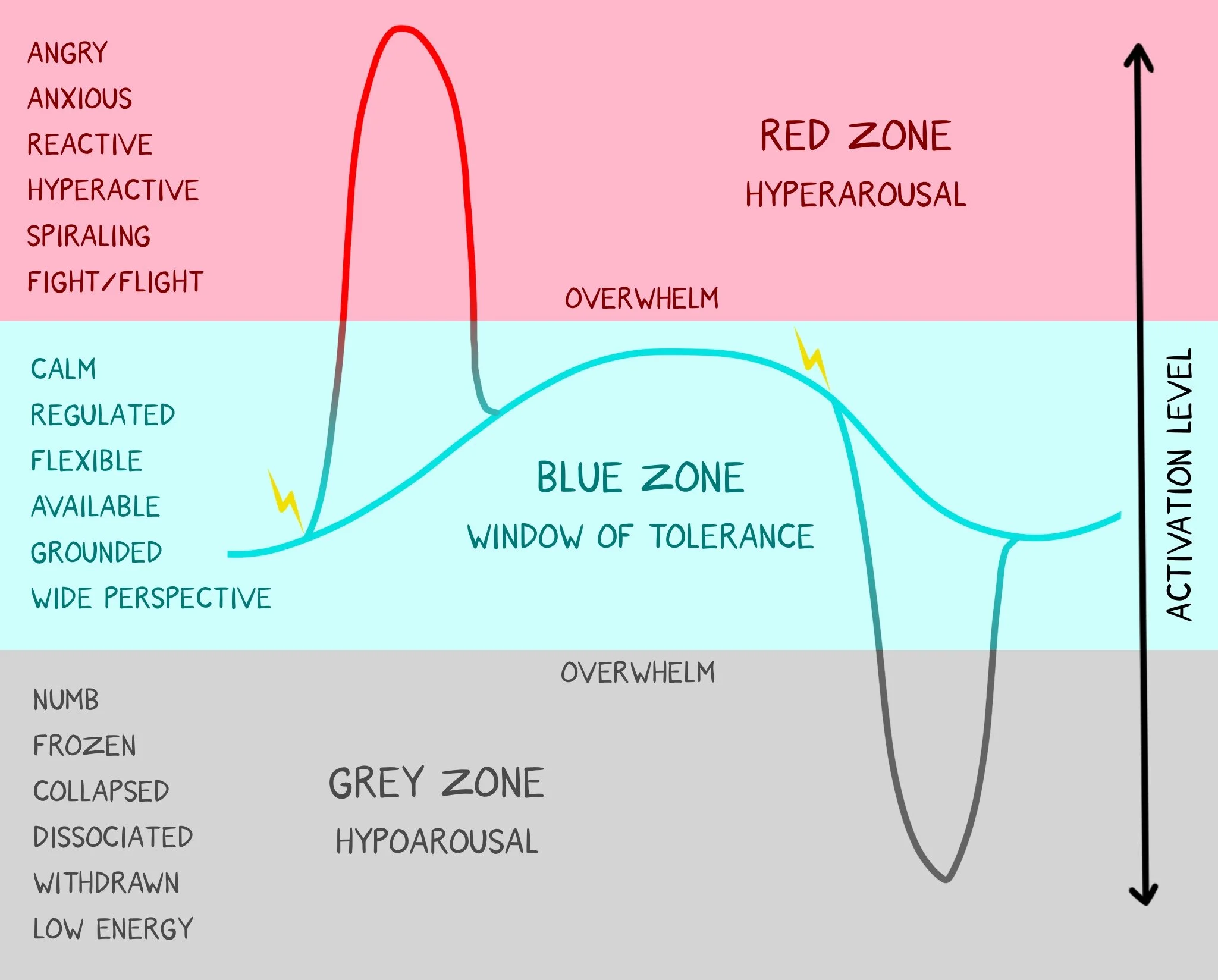
We have two main approaches to heal the nervous system and get you back into the blue:
Exercises (like breathwork, toning, touchwork, and tapping) aimed at interoceptive strengthening, or increasing the signal from body to brain.
Focused trauma work (like somatic therapy or EMDR) aimed at reprocessing or removing the emotional charge from active triggers and undigested experiences.
In our client work, we do both. At home, the first category is where you can make the most difference. Trauma work is better done with a guide who can keep things safe and contained. The good news is that one or two embodiment practices, repeated often, will take you a long way in your healing. And when you hit a wall, or feel ready for deeper work, you can always bring in support, such as one of our somatic therapists.
Filling the Cup (4 mins)
This practice opens a space where you can tap in to your source energy to allow your cup to fill.
Breathwork to Reset Your Nervous System (15 mins)
Fifteen minutes of breathwork, designed to reset your state. You can use it in the heat of the moment when you’re feeling anxious, stressed, depressed, or just not yourself. It gets stuck energy moving and helps bring you back into a grounded, regulated state. You can also use it as a daily practice to tune your nervous system and discharge accumulated stress.
This work compounds. The more you practice, the faster you notice when you’ve lost connection, and the easier it is to find your way back.
Prefer audio only? Listen on Spotify.
New to somatic work? Watch this 2-minute introduction from one of our founders, Steven Bradshaw, or explore our full library of free tools and practices.