

Somatic Therapy
LOS ANGELES, CALIFORNIA & ONLINE
What is Somatic Therapy?
“Somatic” refers to a body-based or a nervous-system approach to psychotherapy.
Somatic symptoms cover a broad range and include both:
Mental and Emotional: anxiety, depression, grief, trauma, anger, reactivity, impulsivity, avoidance & addiction.
Physical: migraines, chronic pain, chronic tension, fatigue, IBS, pelvic pain, CRPS, fibromyalgia & autoimmune syndromes
The root of each of these issues lies in survival physiology that has not been able to process or release at a body level.
Somatic Therapy or “Somatic Experiencing” was developed by Dr. Peter Levine to relieve these types of conditions. It is based on the revolutionary idea that the body keeps the score, or in other words, the best way to resolve psychological distress, or trauma, is through body-awareness practices.
“No matter how much insight and understanding we develop, the rational brain is basically impotent to talk the emotional brain out of its own reality.”
- Bessel van der Kolk
Whereas talk therapy often feels like circling a deeper issue, somatic therapy gets right to the root of the problem, the underlying nervous system. While somatic work can be challenging at times, when you heal at the body-level, it tends to stay healed. You create safety in the body which forms a lasting foundation for your authentic identity, or who you are beyond your trauma.
This foundation supports unexpected benefits like better sleep, energy, relationships, and motivation. Before long, your brain and life have become fundamentally more coherent and satisfying.
Somatic experiencing and body psychotherapy are scientifically-validated.

How Somatic Therapy Really Works
Somatic work is famously hard to describe. You truly have to experience it to get it. But here goes!
Unprocessed material from shock or developmental traumas can become stuck in the mind and body causing a trauma vortex, or split-off system where part of the mind-body is now acting outside of your awareness.
Not getting what you needed as a child, like safety, love, and support, may be the biggest trauma of all and is sometimes described as “death by a thousand cuts.” Medical traumas and car accidents can also completely disrupt a life, even though physically the body may have “recovered.”
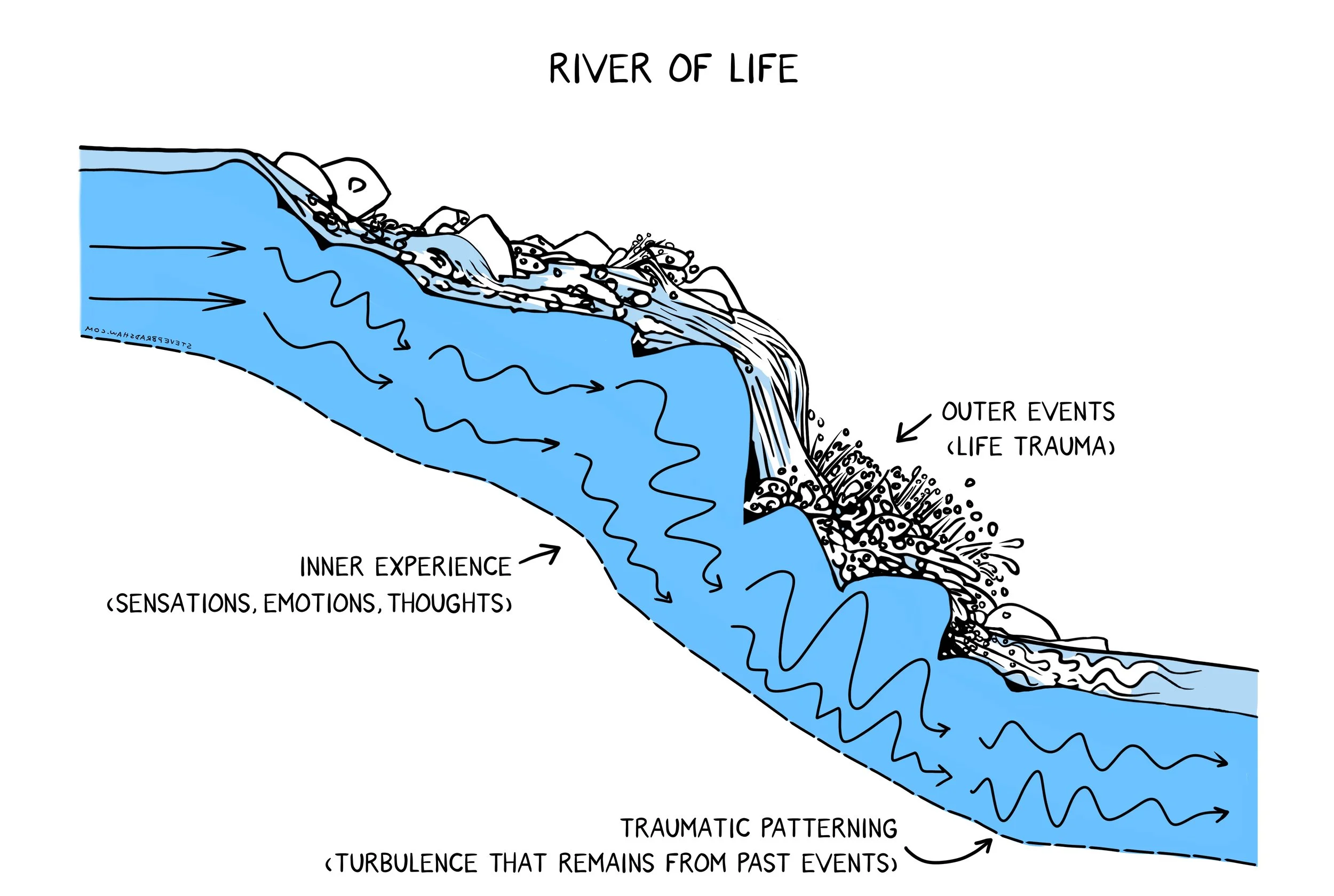
Trauma leads to dysregulation, or a pattern of the nervous system where stress is unable to clear the body. This unresolved stress, or survival energy, becomes bound up in tension and many other patterns. There may be a feeling of “offness” or “not being fully yourself” or intense rumination, or depression, or fixating on a particular symptom.
What is happening, is that there is something going on at a deeper unconscious and embodied level that is causing trouble, and the brain has separated itself from this process. Instead, the thinking brain latches on to all kinds of stories about what the issue is, and may be very active in trying to solve it. Unfortunately, this excessive thinking is itself an effect of the trauma and instead of helping to resolve things, it just makes them worse.
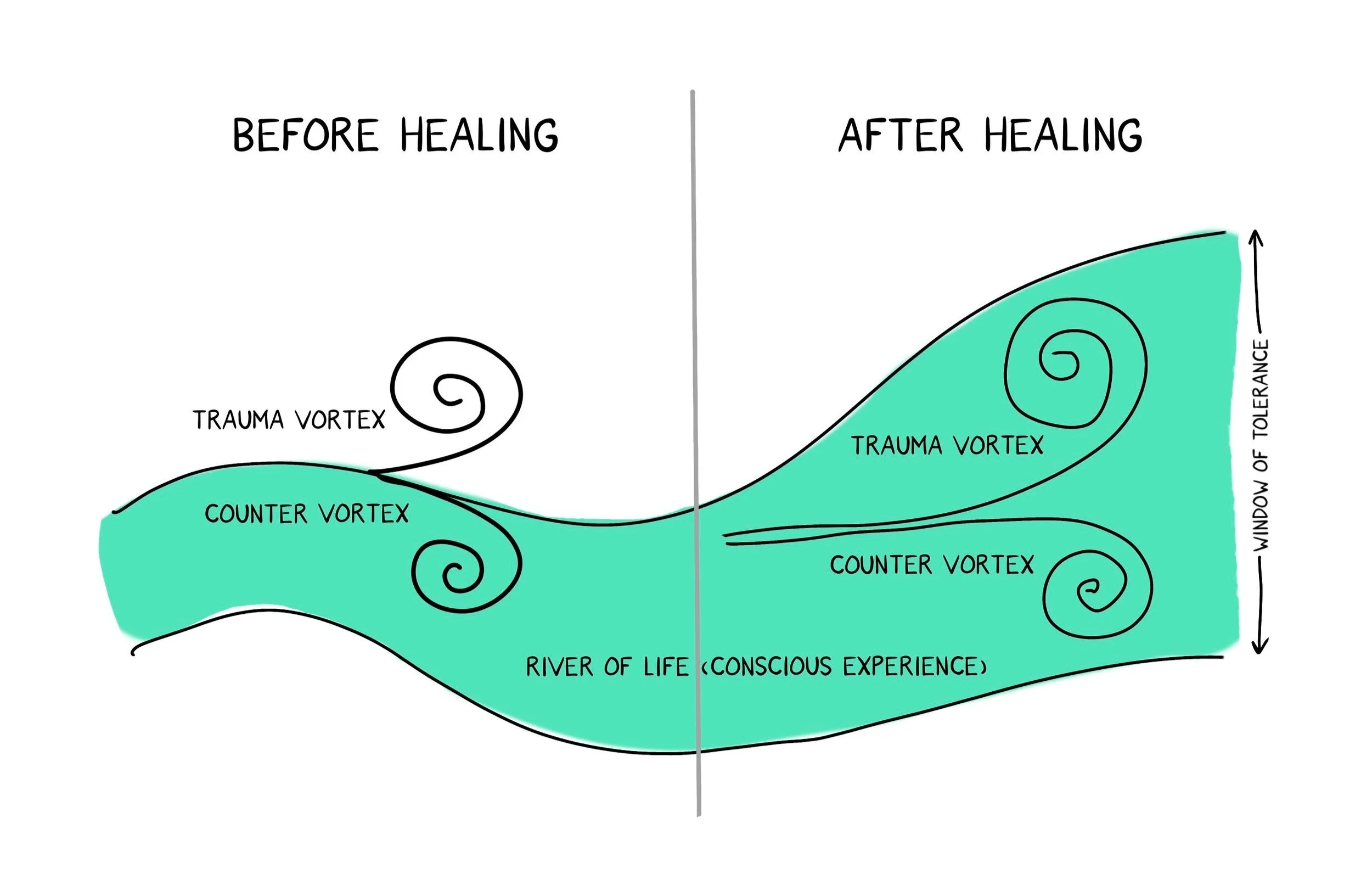
What a mess!
Thankfully, somatic work gets right to the core of the matter, the body. Through a gentle yet profound awareness process, clients are guided to gradually reconnect with their bodies and engage in a controlled integration of challenging material. This could be described as interactive mindfulness or reflective attunement. We are nudging the nervous system to reconnect and re-member the body.
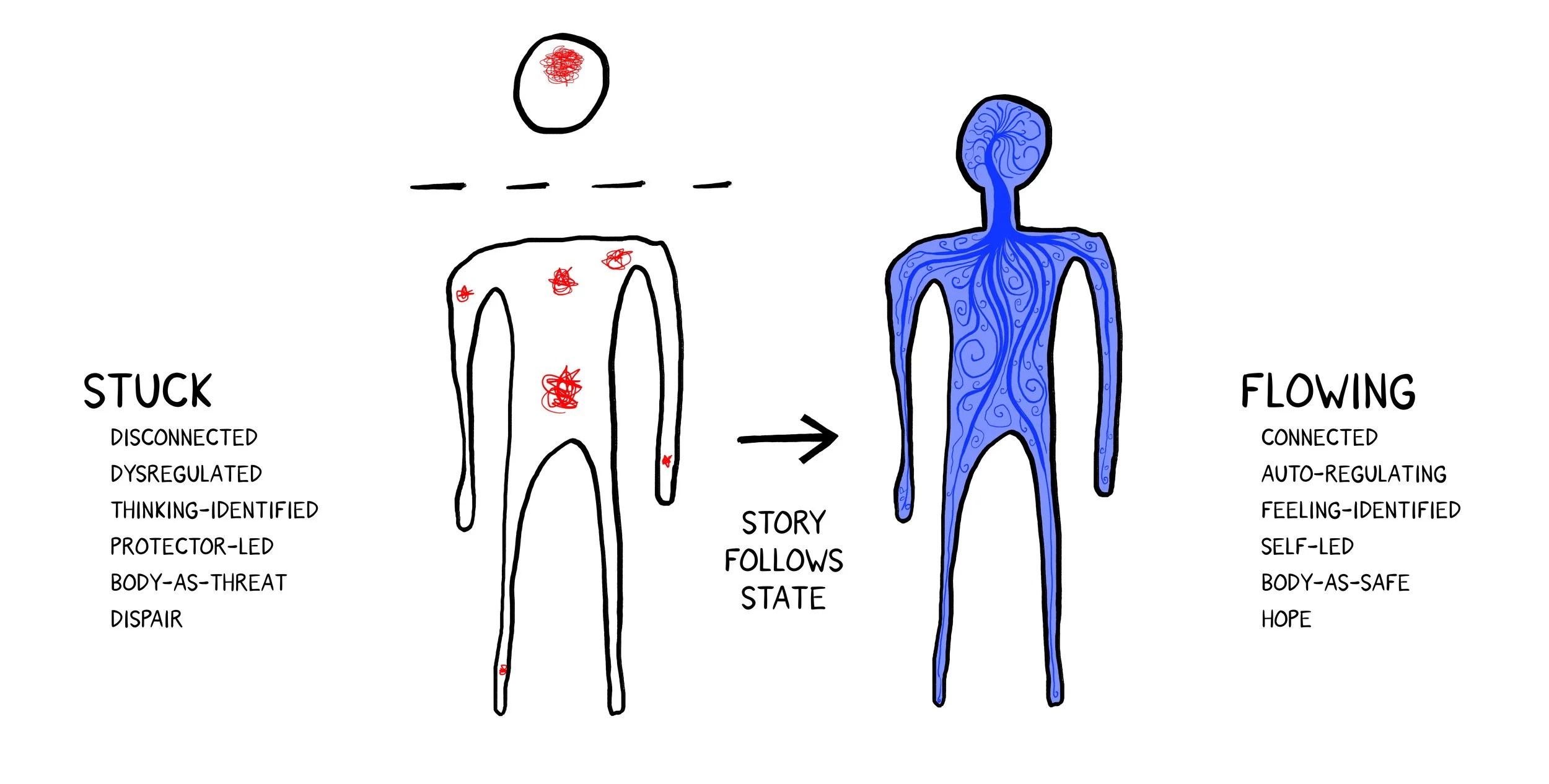
By processing and releasing implicit body memories and increasing body-awareness, somatic therapy heals the original trauma and restores equilibrium. This helps to widen the window of tolerance, which enables the client to stay with discomfort for longer and allows the stress wave to naturally clear in a process known as self-regulation.
Generally, Beyond sessions involve a 50/50 split between awareness work and regular talk therapy. This helps to bring in context and integrate what is surfaced from the body and bring it into narrativized and explicit memory. For example, following somatic work, important meanings and insights may emerge that need to be talked through in order to be fully digested and implemented.
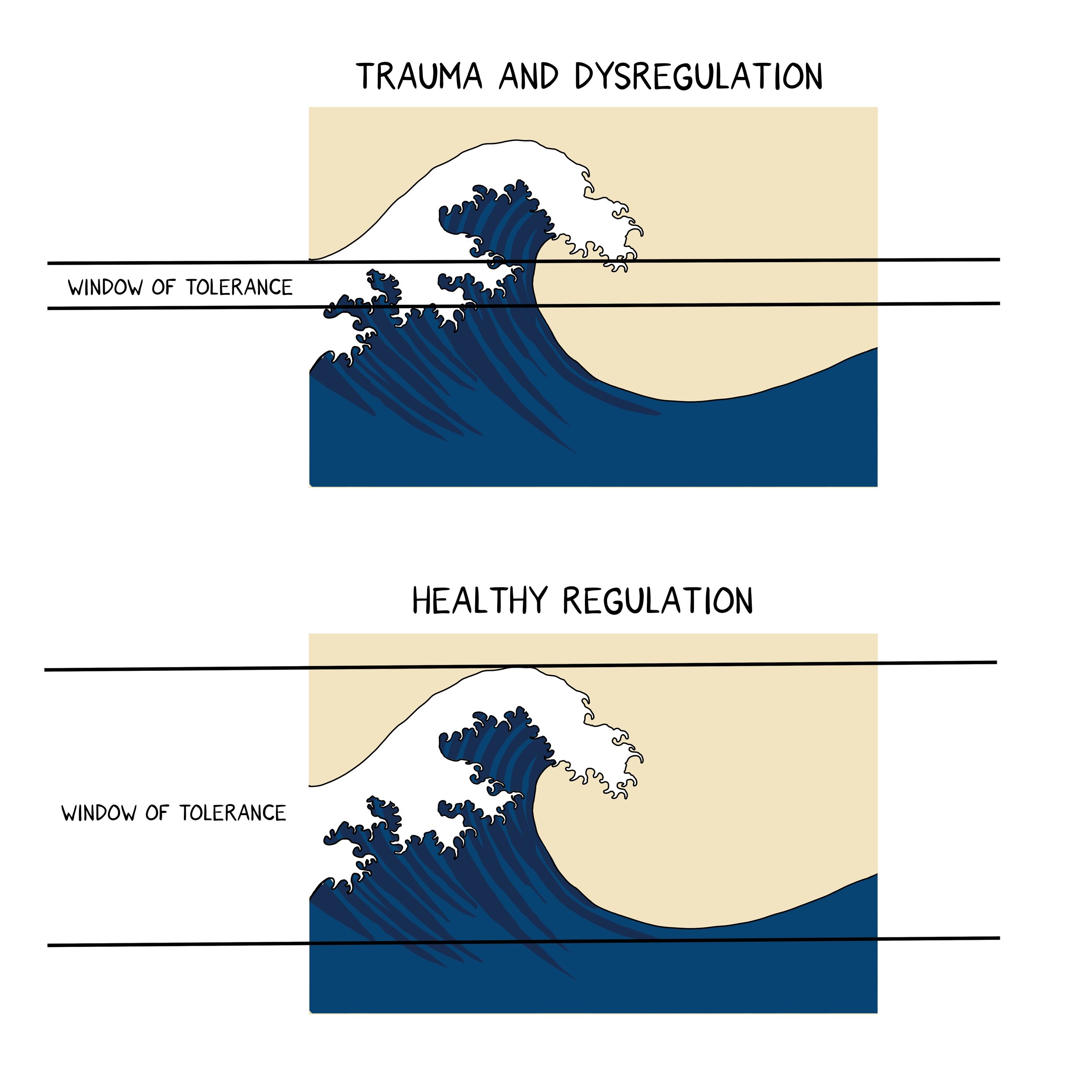
What Dysregulation and Regulation Look Like
Dysregulated Nervous System


Regulated Nervous System
Titration: Trauma is processed emotional pain in manageable doses, a pace that is comfortable for the client and prevents retraumatization.
Pendulation: Clients learn to move from activation and distress through to deactivation, discharge, and relaxation.
Completion: Traumatic experiences that were once interrupted or unprocessed can be revisited and brought to a natural resolution, freeing the mind and body from their lingering effects.
Key Principles of Somatic Therapy:

Body Signs of Activation
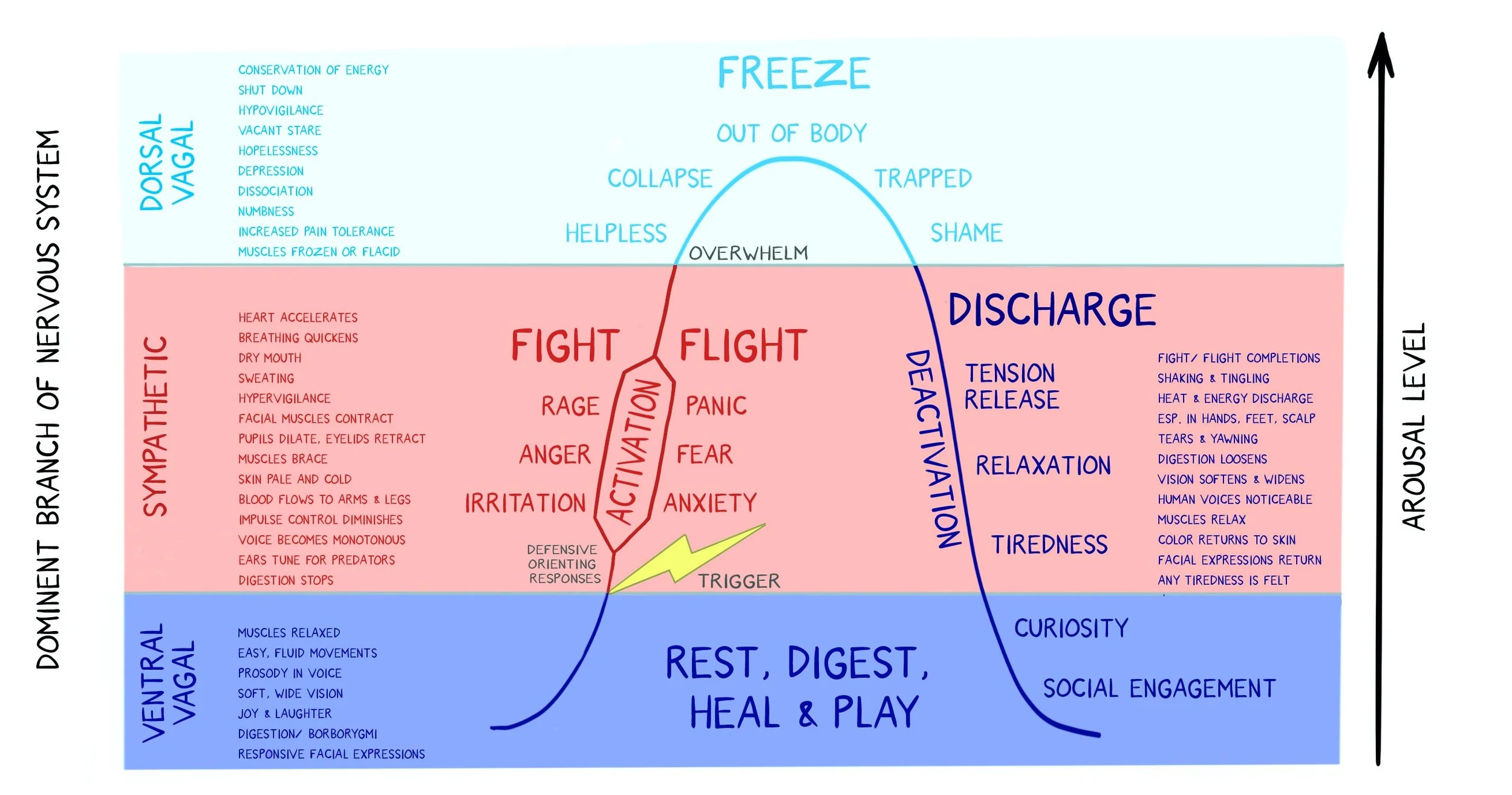
Effect of Somatic Therapy on Social Relating

Meet Peter Levine, Founder of Somatic Experiencing
Peter Levine demonstrating Somatic Experiencing with Ray, a veteran who experienced combat trauma.
Peter Levine describes Somatic Experiencing in a podcast interview
FAQs
-
Somatic therapy works from the position that the body keeps the score. Like thinking, talking can circle endlessly without shifting underlying patterns. Somatic Therapy slows things down and surfaces information that the deeper nervous system is trying to communicate. This information comes in the form of pain and sensation, emotions, anxiety and energetic shifts, body language, facial expressions, tensions, bracing patterns, and micro changes in breathing, heart rate and other physiological markers. With a good somatic therapist, you feel deeply felt and attuned to and absent parts of the nervous system come online. It can feel like coming back to life or getting your bounce back or being high on life. Often the work is slow, meditative, and uncomfortable at first, but the changes are undeniable and soon your body looks forward to it.
We usually provide a mix of both talk and somatic therapy and find that they complement and support each other. Often the talk therapy contextualizes and maps out your situation and allows you to feel deeply understood. Then at the right point, somatic work helps to shift and transform your nervous system to reach a new more vital, secure, and resilient equilibrium. This transformation in turn feeds back into talk therapy, where new insights and new meanings emerge.
Book a free consult, and we can discuss your situation.
-
Yes! Here is a summary of the research on Somatic Experiencing.
"An RCT conducted by Brom and colleagues (2017) indicated that after participating in 15 weekly sessions of SE®, participants reported a significant decrease in the severity of PTSD symptoms and depression."
And here is a metastudy of the research on EMDR.
"Twenty-four randomized controlled trials support the positive effects of EMDR therapy in the treatment of emotional trauma and other adverse life experiences relevant to clinical practice. Seven of 10 studies reported EMDR therapy to be more rapid and/or more effective than trauma-focused cognitive behavioral therapy. Twelve randomized studies of the eye movement component noted rapid decreases in negative emotions and/or vividness of disturbing images, with an additional 8 reporting a variety of other memory effects. Numerous other evaluations document that EMDR therapy provides relief from a variety of somatic complaints."
And here is a summary of the research on IFS.
“As a clinical treatment, IFS has been rated effective for improving general functioning and well-being. In addition, it has been rated promising for each of: improving phobia, panic, and generalized anxiety disorders and symptoms; physical health conditions and symptoms; personal resilience/self-concept; and depression and depressive symptoms.”
“The longitudinal randomized clinical study, which involved 70- some patients in an IFS treatment during 36 weeks with periodic follow-ups including 12 months post- intervention, was published in August 2013 in the peer-reviewed Journal of Rheumatology.”
-
Sometimes we just need a little nudge to get onto a better track and we're not that far off coping a lot better and flowing with life. In that case, 6 - 12 sessions may be enough to gain a new piece of insight, have a different experience, and apply this to living in a different way and shifting things onto a better track. Often in these cases, clients find therapy so helpful and enjoyable that they continue even after they've resolved what they came for.
Other times, due to life adversity, we have become very set in our ways and our personality structure now blocks what we desire most (love, success, happiness, etc). In these cases we may need to work from 6 months to several years to make a fundamental shift in order to turn things around. In these cases, the work usually takes longer than we would like, but the change is more significant than we anticipate. The benefits from long term work reach into every area of life and compound over the years that follow.
Book a free consult, and we can discuss your situation
-
We think the gold standard for somatic-focused work has to be in-person, given the greater amount of information available and the increased potential for somatic resonance and micro-attunements.
That said, a surprising amount is conveyed through the screen. We have seen many telehealth somatic sessions get to a deeply transformational space. Virtual sessions are also more convenient and it's easier to maintain a weekly rhythm, which counts for a lot. We do like it when virtual clients are able to come in occasionally for an in-person session. The connection seems to carry over to on-screen work. We would say try whatever works best for your schedule and see how you find it.
You're welcome to call and do a free consultation to discuss your situation.
-
Some part of you must disagree or you wouldn't be here reading about therapy! That part just needs more support. We become the champion of that part of you that wants things to be a lot better. We've seen many times how getting into the rhythm of therapy and putting an action-reflection loop into place is absolutely transformational. Perhaps the conditions have not been conducive until now. Perhaps the voices of doubt and judgment have just been a little too strong. Perhaps everything you've done up to this point can become the foundation and launchpad for finally breaking through. There's only one way to find out.
Book a free consult, and we can discuss your situation. There is no ongoing commitment and we'll be honest about what we think could be possible for you.
-
We offer a range of fees based on clinician and modality. You can see our fee ranges here. Our fees are competitive against many private practices in California, particularly for somatic offerings. Many of our clinicians have a few sliding scale spots that can lower the fee somewhat in cases of financial need.
If you need a substantially reduced fee, we can recommend low-fee training clinics such as Maple Counseling Center, Antioch University Counseling Center, Southern California Counseling Center, Valley Community Counseling Clinic, Airport Marina Counseling Center, or Counseling West. These can be great options to get started. The main issue tends to be therapist turnover, as therapists complete their training and move into private practice. There is also a high variance between therapists, so you may need to go through several before you find a good fit and then you may lose them after several months. There can also be long waitlists depending on the time of year.
If you would like to discuss your situation and what you can afford at this time, please schedule a free consultation.
-
Yes, we accept insurance as an out-of-network provider for all PPO plans, including: Anthem Blue Cross, Blue Shield, Blue Card, HealthNet, United Healthcare, Cigna, Optum, Magellan, Value Plus and many others, depending on your coverage. We are not in-network or included within HMO plans for any providers.
With PPO, you pay the full fee upfront and your insurance company reimburses you directly.
Beyond can call your insurance on your behalf in order to find out what your coverage would be.
If you schedule a free consult, we can discuss how this would work and any other questions you have about insurance.
-
We have a matching process where you first do a free consultation with an intake coordinator. The coordinator listens to your story, provides some information, and helps to select the best therapist for you. You then get another free consultation with the therapist you select.
Match is based on personality, location, in person or virtual and the approach best suited to your issue. All of our therapists have a foundation in somatic and depth psychologies. Likely you will connect with one more than the others.
We look forward to hearing from you. Book a free consultation now!
Hear What Clients Are Saying
-
![]()
Christina, Data Analyst, San Francisco
“From our first session I felt that we uncovered the root of my issues and that I was in good hands. Over the next year, I transformed completely. I went from having chronic pain that prevented me from continuing my career, to now entering that career path again. Look no further!”
-
![]()
David, Somatic Therapist, Kent
“My coach is a highly attuned listener, and processor. The way he holds 'space' is a splendid mix of wisdom, learning, guiding (to the outer edges of the comfort zone, and a little beyond) and support. He helps to shift my awareness and perspective in the most profound way. “
-
![]()
Declan, Software Engineer, London
“I've made actual progress rather than being stuck. Sor far, it’s the only therapist or coach I've had who's been able to talk about literature and art and all of the beautiful things that make up this world in a way that feels genuine. Our work has been very iterative and incremental. I got something in every session.”
-
![]()
Devon, Jewelry Designer, San Francisco
“My therapist is very open and very kind. He's really perceptive and good at listening and honoring where a person is at or what they're feeling and what they might need in that moment. He makes people feel comfortable and safe and fosters a space that felt open and comfortable.”
-
![]()
Faisal, Incoming MD Candidate, DC
“My therapist was instrumental to my growth and coming of age in college, and he has continued to follow-up with me ever since. This is not a business for him. This is his life's calling, and you can feel it. Our sessions have been transformative and lasting.“
-
![]()
Jacob, Scientist, Boston
“I found my coach engaging and curious. He's very unique and he's up to something, I think good! I feel less isolated and more heart-open and connected. I can really see myself in others. I am more in tune now, not just with people but also with animals and trees.”
-
![]()
James, Creative Director, Grand Rapids
“I'm better equipped to handle circumstances and better see how things work. Techniques are sticking. If you look at my brain before we started the work and now, I think there are some new neural pathways, and others that are less entrenched. Our relationship has made a big difference in my life.“
-
![]()
Jorge, Psychology Student, LA
“I met my therapist on a whim at one of the lowest points of my life and have since reached heights of peace, stability and self-advocacy I didn't think possible. Through Beyond, I’ve changed in resounding and permanent ways. I'm ever grateful and can't recommend the care I've received enough.”
-
![]()
Joshua Horsley, Podcaster, Reno
“Beyond has made a huge impact in my life. I instantly connected with my coach and I look forward to our weekly sessions. Now, when I’m stuck or ruminating I often think “what would my coach say to me?” and it really helps me tackle problems on my own. Highly, highly, recommend Beyond!”
-
![]()
Kim, London
“I find my coach to be a really calming and non-judgmental presence. He is very present for you when you're in a session, which I think is really important. I found it really useful and enriching to have more frameworks with which to understand myself and other people.”
-
![]()
Kirby, Meditation Teacher, Vancouver
“Beyond is doing such significant and special work in the world that it is difficult to tame into words. My coach has the rare ability to walk with you down the darker trails of your psyche with warmth. He holds safe and generous space. Thank you, thank you, thank you!”
-
![]()
Kris, Documentary Filmmaker, LA
“I’m a huge fan of Steven and the team at Beyond Psychology! I had a super illuminating and impactful experience. It helped unlock some personal insights and healing that had otherwise been hard to access. I would definitely recommend working with them, and personally hope to do so again in the future!”
-
![]()
Kuljit, Leadership Coach, DC
“I’ll be bold and say the modalities don’t matter as much as my coach’s presence. His calm and connected way of being facilitated my awareness and processing. It amplified my sense of safety and served as a mirror to reflect what was emerging within me. This allowed me to be more embodied in my experiences, which was the next step in my healing journey.”
-
![]()
Kyle, Actor, Bay Area
“My therapist at Beyond is amazing, it’s been really easy for me to talk out my thoughts and have assistance whenever I’ve been in a rough patch or whenever I’ve just been unsure of what to do or what steps to take with a situation. He is also very fun to talk to and very funny!”
-
![]()
Lisa, Psychologist and Researcher, Gothenburg
“My coach at Beyond is genuinely sincere and perceptive, and his deep passion for healing work is palpable. From our very first encounter, I sensed his non-judgmental nature. I wholeheartedly recommend working with him, as it has been an immensely positive experience.”
-
![]()
Osiris, Yoga Therapist, LA
“I feel like I've made real progress in my healing journey. I'm so grateful to have found someone like my Beyond coach. I highly recommend Beyond to anyone who is struggling with stress, anxiety, or other nervous system issues. Thank you for all that you do!”
-
![]()
Paula, Ocean Scientist, Honolulu
“My Beyond coach is deeply knowledgeable and passionate. His holistic and creative approach resonated with me and not only opened new ways of understanding, seeing and experiencing myself but also sparked my own creativity. I could relax into myself and feel connection with others without feeling judged.“
-
![]()
Raquel, Personal Assistant, LA
“I had such a sense of holding, safety and support that let me feel comfortable, seen and held.. My words for him are: safe, connecting, caring, and understanding. I feel grateful now and that I'm still growing and discovering different parts of me. I now have some real tools in case I hit potholes out in the world.”
-
![]()
Tom, Senior Product Manager, London
“My coach is really friendly and creates an open environment where it’s really easy to talk. I'm super grateful for all the work that I’ve done with him and can’t rate him highly enough. I definitely could not be where I am now without him. Thank you!”








Beyond Practitioners
-
Steven Bradshaw
PSYCHOTHERAPIST, FOUNDER
Somatic, EMDR, IFS,
Founder CoachingWest LA, Online
-

Angie Bradshaw
PSYCHOTHERAPIST, FOUNDER
Somatic, EMDR, IFS, CPTSD, Highly Sensitive Person
West LA, Online
-

Natalie Baker
PSYCHOTHERAPIST
Somatic, EMDR, IFS, Parenting, Health & Survivorship
West LA, Beverly Hills, Online
-
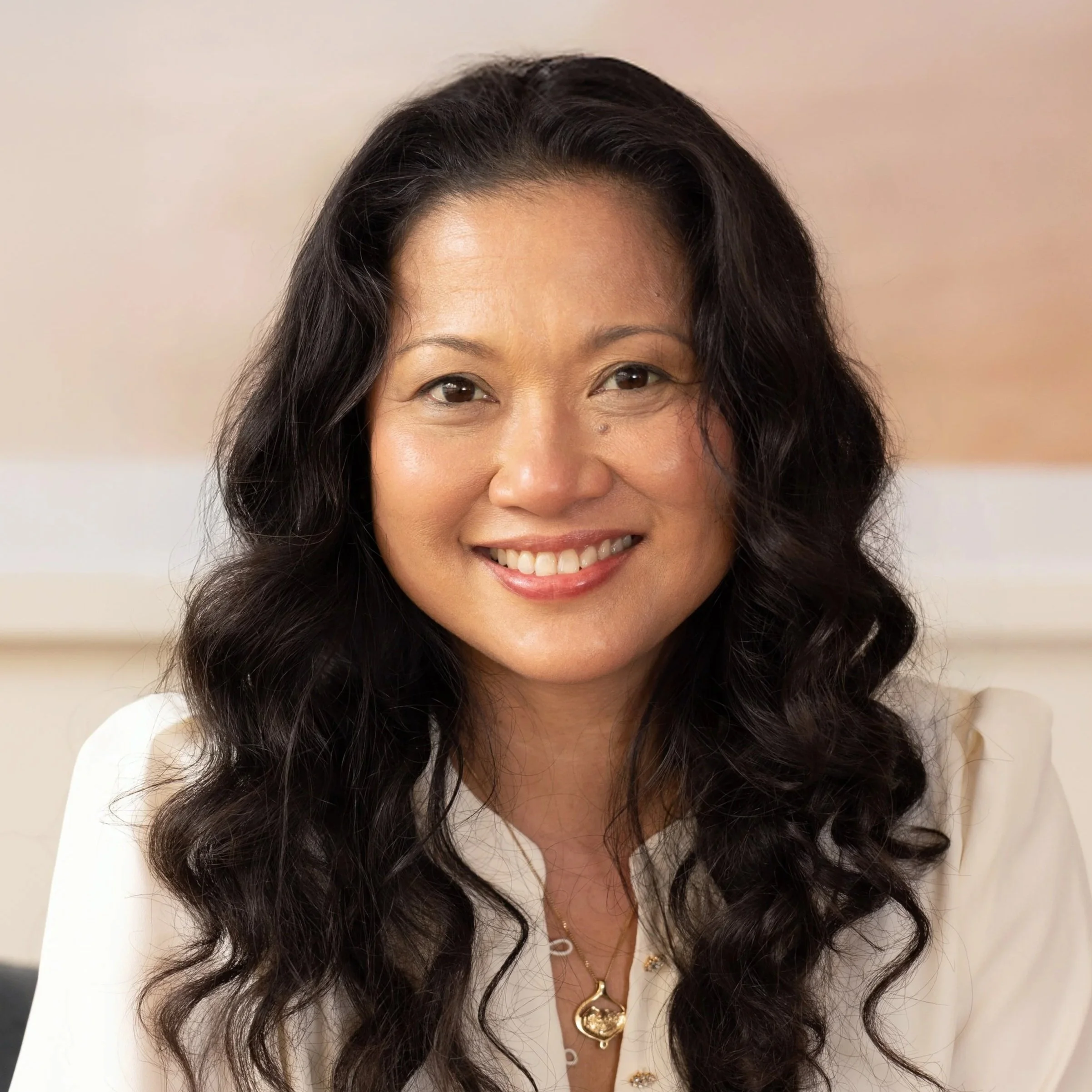
Rosalie Maduro
PSYCHOTHERAPIST
Somatic, EMDR, IFS, Couples, Parenting
West LA, Online
-

Flavia MacMenamin
PSYCHOTHERAPIST ASSOCIATE
Somatic, IFS, Couples (EFT), Parenting, Depth Psychology
West LA, Online
-
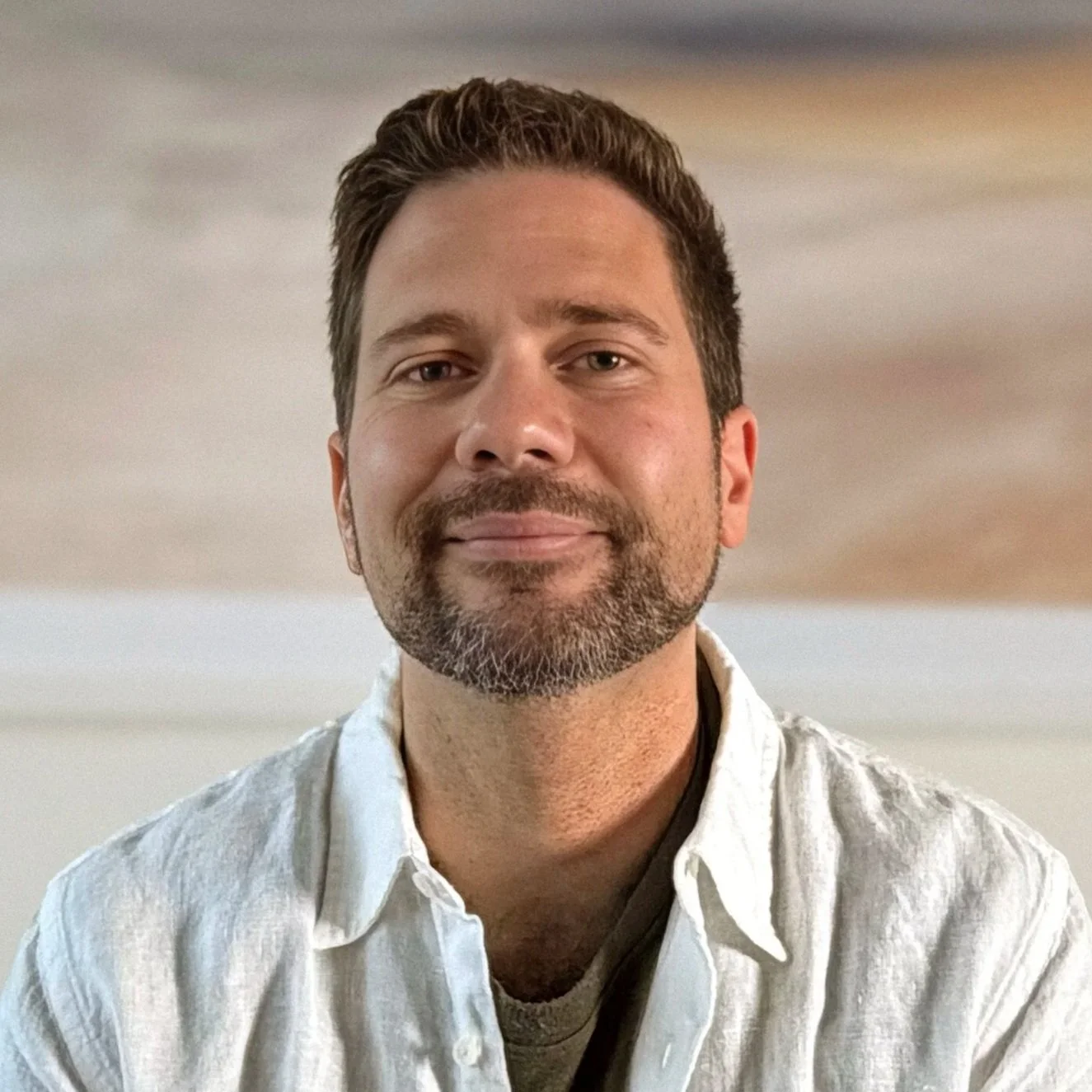
Matt van Onselen
PSYCHOTHERAPIST ASSOCIATE
Somatic, IFS, Jungian, Mindfulness
Los Feliz, Studio City, Online
-
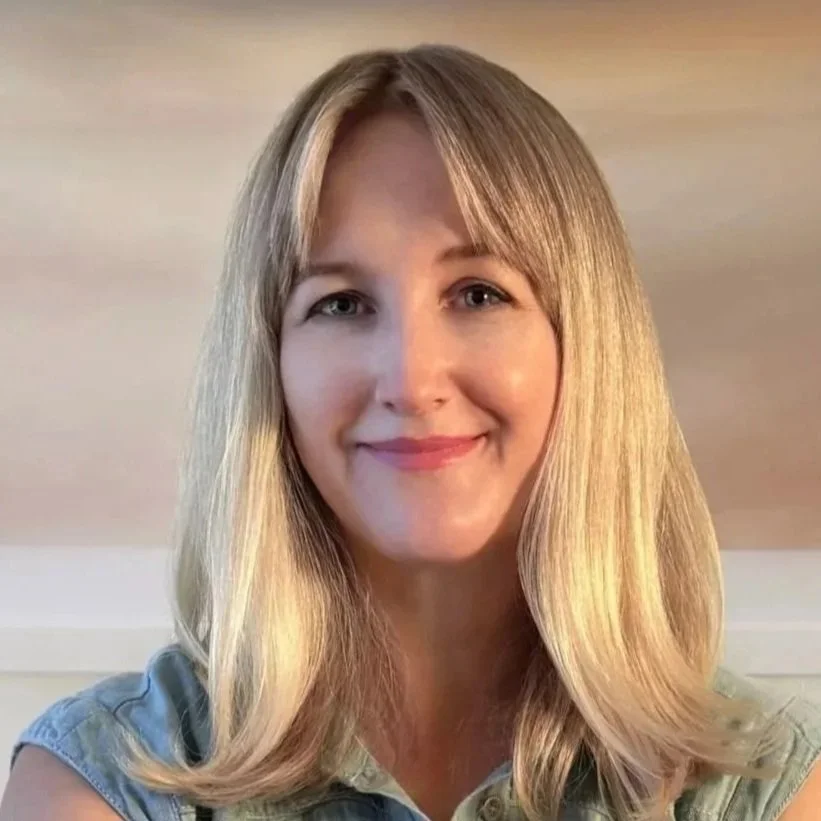
Megan McAllister
PSYCHOTHERAPIST ASSOCIATE
Somatic,
Attachment-Focused EMDRWest Los Angeles, Online
-
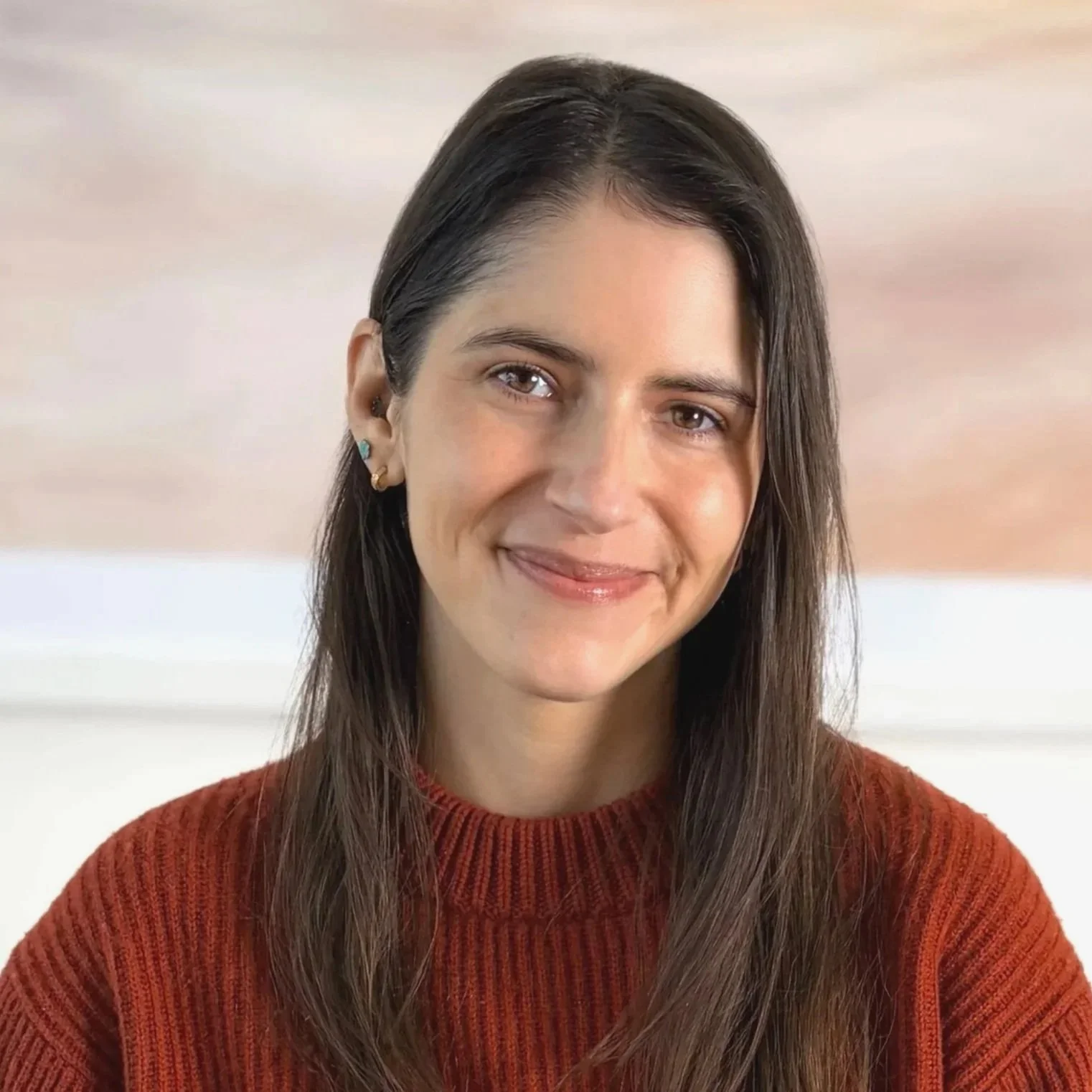
Sarah Dunn
PSYCHOTHERAPIST ASSOCIATE
Somatic, IFS, ADHD & Autism, Health Conditions
West LA, Studio City, Online
-
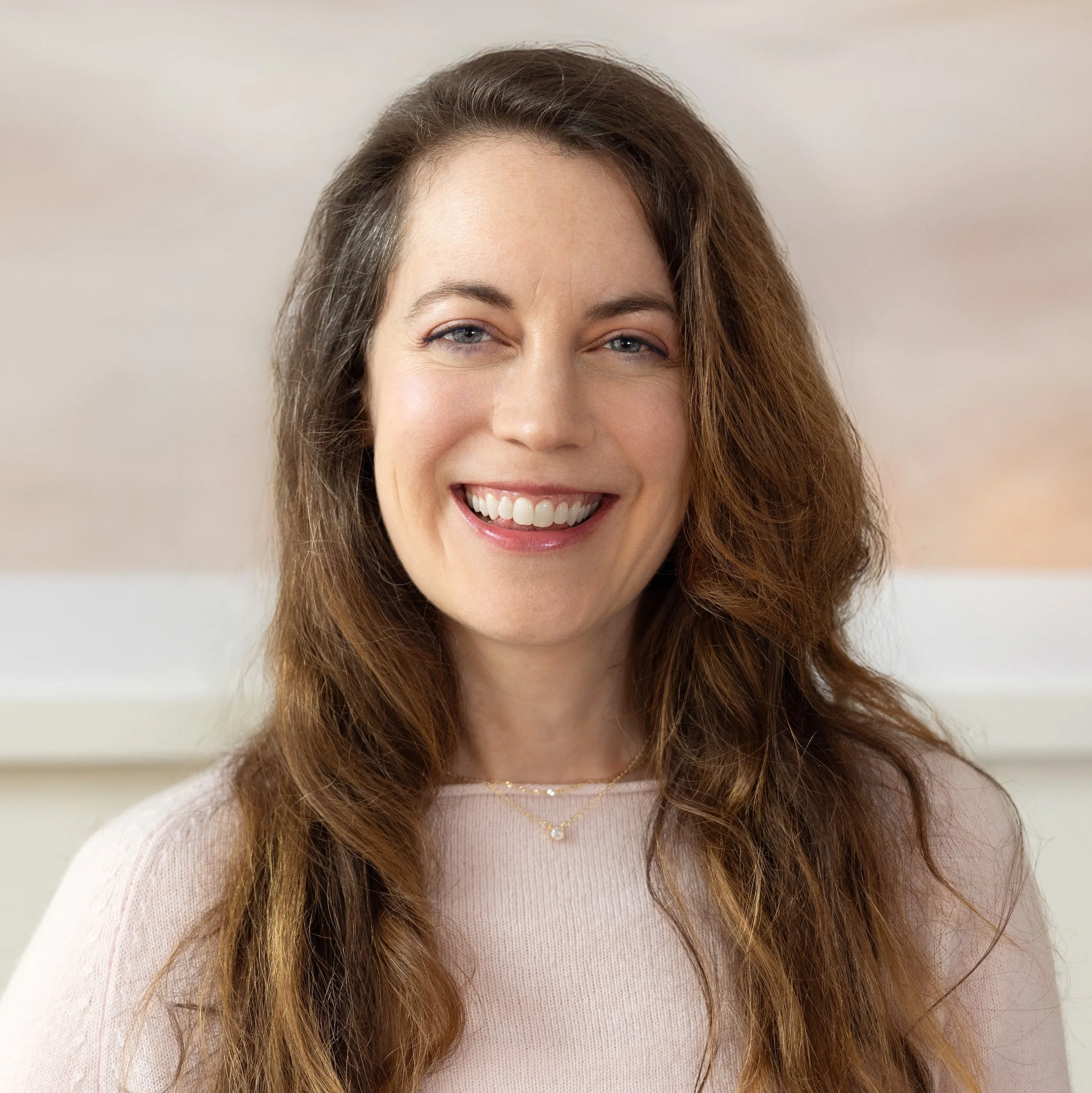
Sarah Bibbo
PSYCHOTHERAPIST ASSOCIATE
Somatic, IFS, CPTSD
West LA, Online
Embark On Your Healing Journey
Contact us today to learn more about how Somatic Therapy can help you find true relief. We can answer your questions and support you as you take your first steps toward a more balanced and vibrant life.