
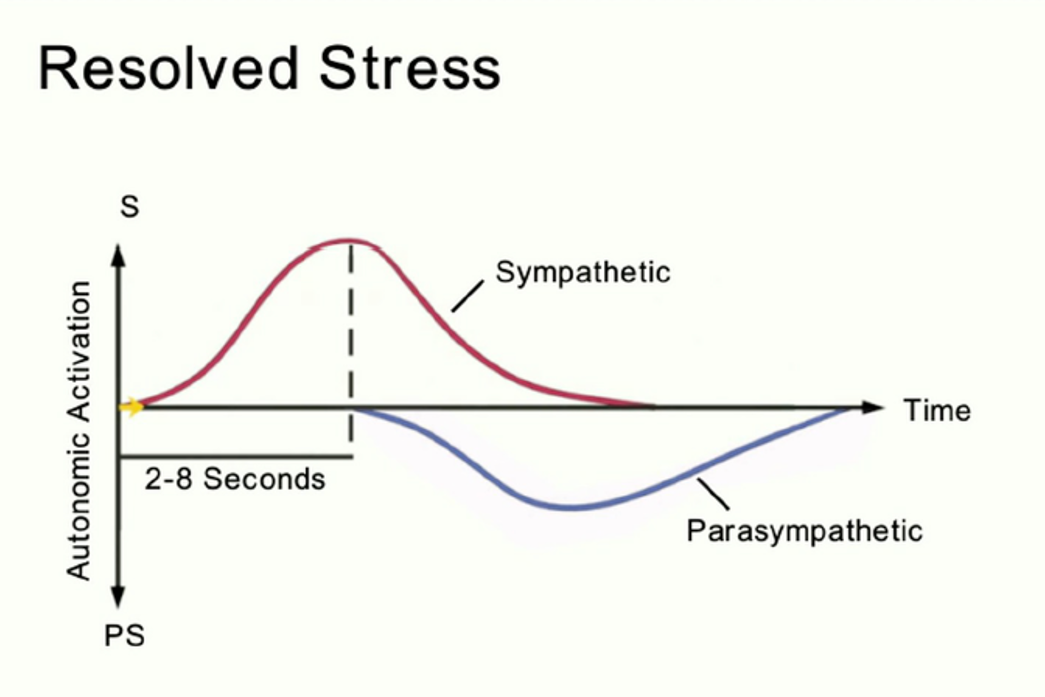
The chart below shows the activation wave of a healthy, well-resourced nervous system exposed to danger. The threat triggers the sympathetic system, or the body's gas pedal (adrenaline, energy, fear, anger). Once the threat passes, that surge triggers the parasympathetic system, or the body's brake, which brings everything back down to baseline. All the survival energy gets discharged and the activation wave completes.
This next chart shows the same wave in a stressed or dysregulated system. The threat triggers the gas, but the brakes only half-engage, and survival energy is left undischarged in the body. This can happen because thinking interrupts the settling process, because muscular bracing keeps the energy from escaping, or because the system is already carrying too much to be able to clear the latest event.
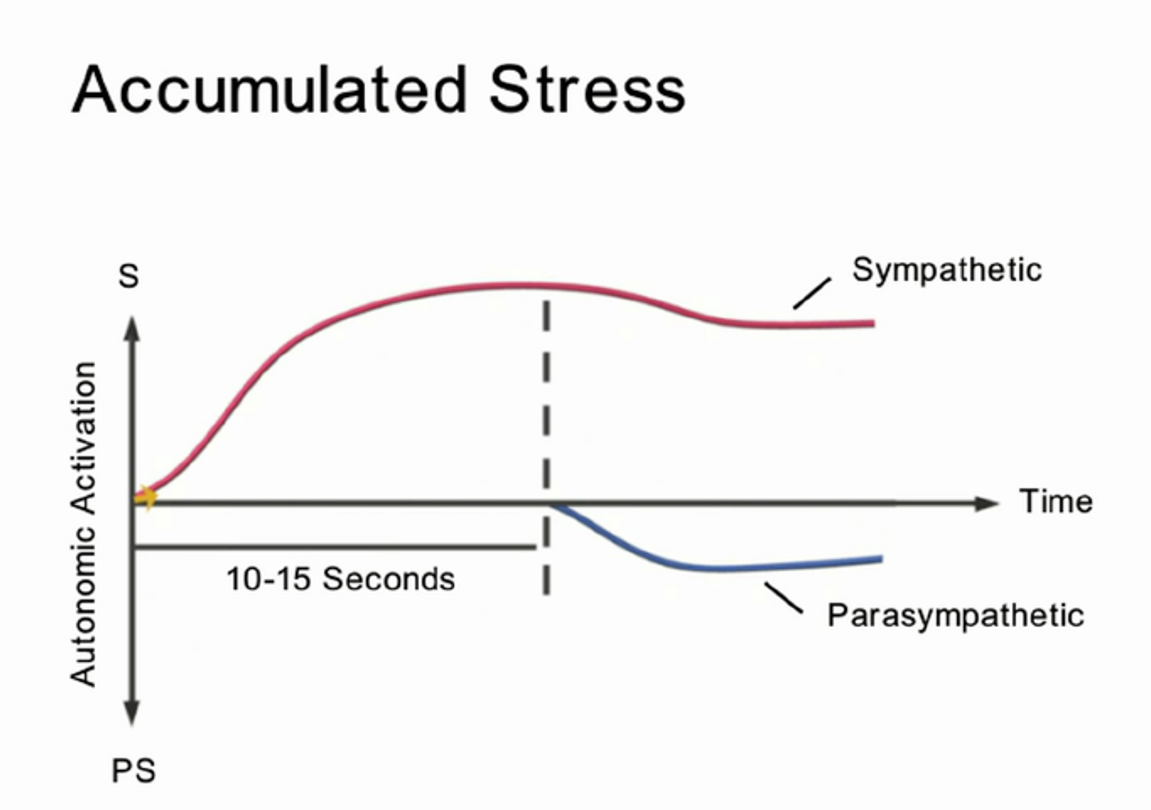
The result is that surplus activation energy stays in the body and compounds over time. Chronic tension patterns and physiological dissociation then bind the energy in place. Scientists call the result allostatic load, or the cumulative wear and tear of stress that has not been able to resolve or complete. You could also call it burnout.
This cumulative stress load creates a negative feedback loop that leads to further load, for example general work stress leads to bad sleep, which leads to feeling keyed up the next day, which leads to faster energy consumption, poor dietary choices and relationship conflict. As the load increases, so does the likelihood of breakdown.
Thankfully, this process can be reversed. Reduce the load and the cycle turns virtuous: better clearing, better sleep, more capacity.
The embodiment practices we've been introducing, aim to reconnect the sympathetic and parasympathetic systems so that they are able to clear stress in real time, so that you don't add to your stress load.
Even better, these practice slowly clear your existing stress load.
Practice: Brace Collapse Rebound (4 mins) A short physical sequence that lets the body feel the difference between bracing and letting go to find your natural energy.
Wondering whether accumulated stress has turned into burnout? Read Feeling like charred toast? The signs of burnout and what to do about it. And if you’d like support clearing your stress load, you can schedule a free consultation anytime.