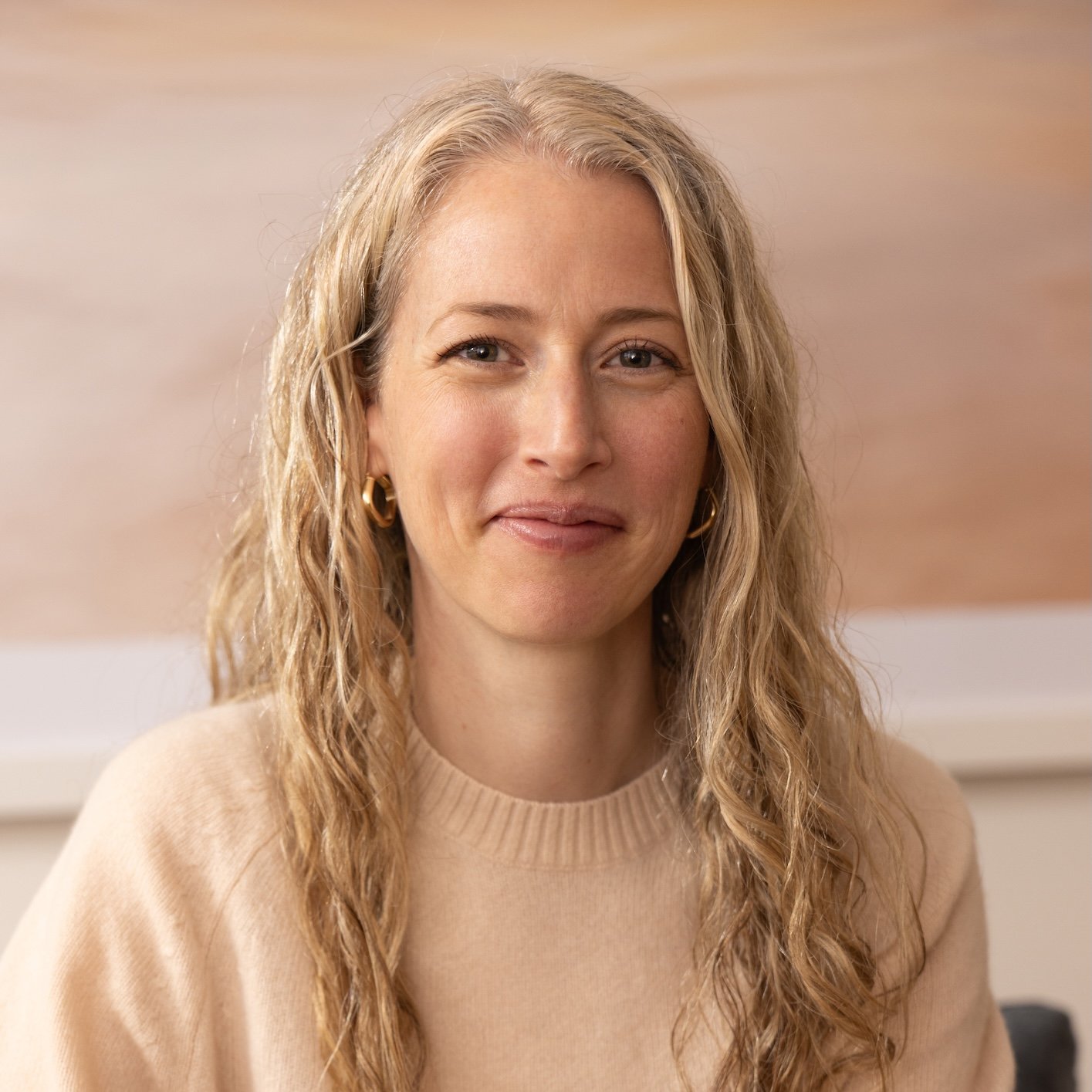
Angie Bradshaw, LMFT
Somatic therapist in Brentwood, CA and online
I'm a licensed psychotherapist trained in Somatic Experiencing and EMDR. I use attachment-based, trauma-informed approaches that address the root sources of distress. My style is curious and affirming, and I can be direct and practical when needed.
- Approaches
- Somatic Experiencing, EMDR, IFS, psychodynamic
- Focus
- Developmental trauma, highly sensitive people, neurodivergence, complex family dynamics
- Background
- Advertising in New York, art education
Therapy with me
I bring warmth, curiosity and creativity into sessions, helping clients understand unconscious patterns and restore the mind-body connection.
Clients often share that they feel both supported and gently challenged in our work together. I work with individual adults and families on:
-
Highly sensitive person
- Supporting your sensitivity in career and relationships
- Health conditions and health anxiety
-
Trauma and growth
- Developmental trauma (C‑PTSD)
- Burnout and stress
- Post-traumatic growth
-
Family and relationships
- Parenting and blended families
- Family of origin dynamics
- Relationship challenges
-
Identity and transitions
- Neurodiversity
- Sexuality and LGBTQ+
- Mid-life reinvention

My background
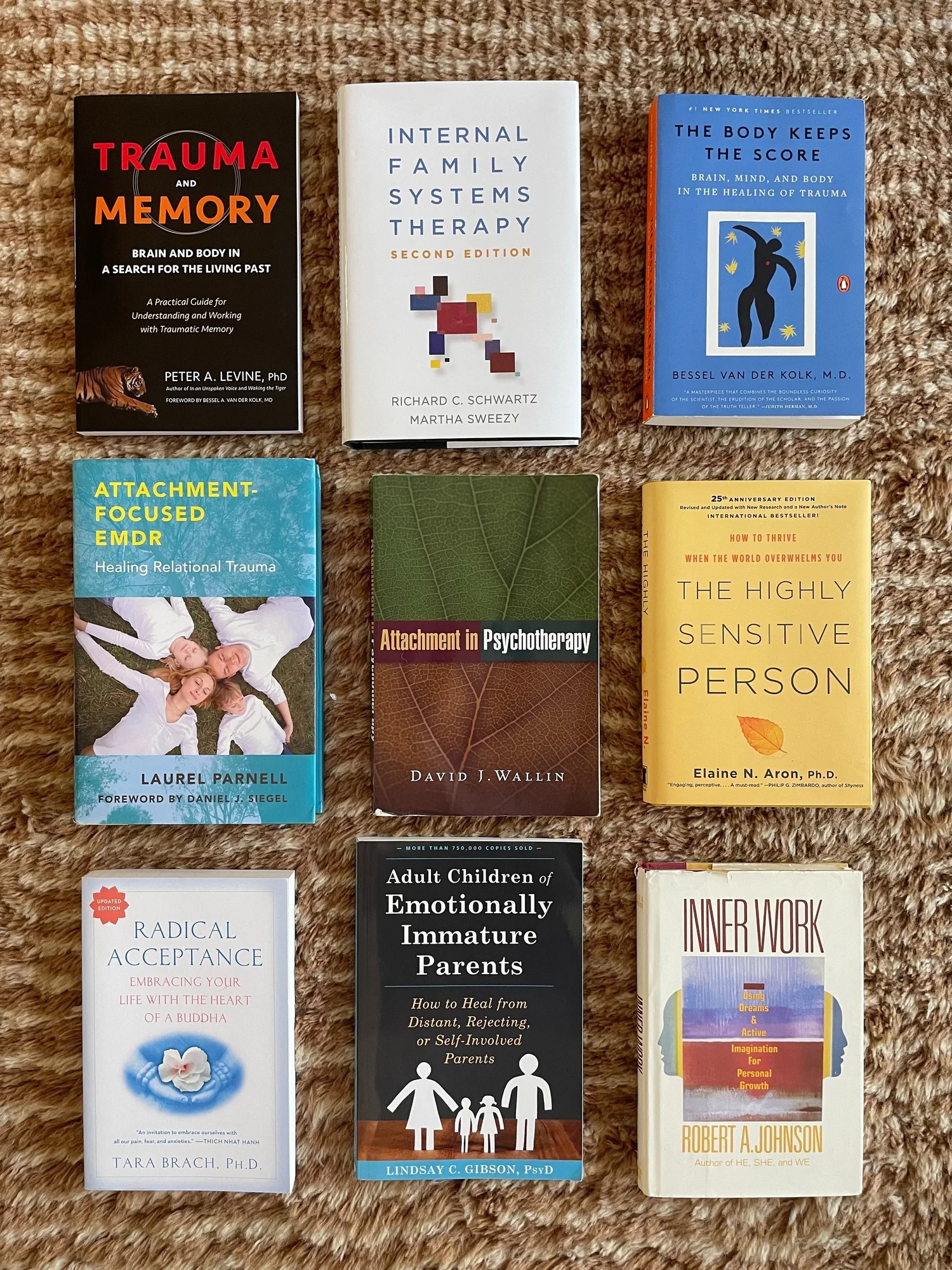
I completed the three-year Somatic Experiencing training and trained personally with Bessel van der Kolk, author of The Body Keeps the Score. I also trained under child and family psychologist Dr. Wendy Denham, whose approach emphasizes parent-child attachment bonds.
Before becoming a therapist, I taught visual art in schools throughout Los Angeles. Before that, I worked in brand strategy for advertising agencies in New York and Los Angeles. I also spent five years traveling abroad and exploring wild places.
Outside of this work, I enjoy making art, practicing yoga and spending time in nature. I live with my family in Santa Monica.
Training and credentials
- Licensed Marriage and Family Therapist #152900Board of Behavioral Sciences
- MS, Counseling, Marriage and Family TherapyCalifornia State University, Northridge
- BA, Leadership Studies, Business Administration minorUniversity of Richmond
- Somatic Experiencing Professional Training ProgramSomatic Experiencing International
- EMDR Basic Training (EMDRIA-certified)Trauma Recovery HAP
- Reflective Parenting Program 1Center for Reflective Communities
- Certificate in Early Childhood DevelopmentSanta Monica College
- Trauma-Focused Cognitive Behavioral TherapyMUSC
- Child-Centered Play Therapy with Neurorelational EmphasisPlay Strong Institute
- Parent-Child Interaction TherapyUniversity of California, Davis
- Psychodynamics of Diagnosis with Dr. Nancy McWilliamsLos Angeles Institute and Society for Psychoanalytic Studies
- Clinical Application of the Adult Attachment InterviewInsight Center
- Mindful Awareness Practices 1University of California, Los Angeles
- Visual Thinking StrategiesMuseum of Contemporary Art (MoCA)
How the work unfolds
Regulate your nervous system
I teach practices that help your nervous system move toward regulation. You learn to be with challenging sensations without bracing, so energy can shift and release instead of building up in your body. Over time, your window of tolerance expands and your system spends more time in "rest and digest," even as you move through the world.
Unburden old trauma
Original traumas often live on as hypersensitivity to threat. Together we meet and befriend the protective parts that overreact or underreact to present situations. With understanding and acceptance, these parts calm down and start working as a team, helping you become more responsive and vital.
Build your own tool kit
I help you build a personalized tool kit to manage symptoms going forward. When you stop fearing your symptoms, they lose power over you and begin to fade. Clients can report forgetting about symptoms as their life comes back into the foreground.
Sessions and fees
I offer sessions in person in Brentwood and online.
Individuals
$350
50-minute session
Families and parents
$350
50-minute session
See how insurance works
We accept insurance as an out-of-network provider for all PPO plans, including Anthem Blue Cross, Blue Shield, Blue Card, HealthNet, United Healthcare, Cigna, Optum, Magellan, Value Plus and many others.
You pay the full fee upfront, we submit a claim on your behalf after each session, and your insurance company reimburses you directly. As a complimentary service, we check your eligibility and get an estimate of your coverage. Your annual deductible needs to be met before any reimbursement, and coverage is often partial, depending on your plan.
What does out-of-network mean?
We aren't contracted in-network with your insurance company, so you can't use your insurance directly as payment, and in-network benefits don't apply. Most PPO plans include separate out-of-network benefits that reimburse a portion of the cost of seeing providers outside their network. We don't participate with Medicare, Medi-Cal, Medicaid or HMO plans.
What is a deductible?
Your deductible is the amount you first need to reach in out-of-pocket costs before your insurance begins to cover services. Some plans have separate in-network and out-of-network deductibles, so check carefully.
What is an allowed amount?
Most insurance companies cap the rate their coverage is based on for each service in each zip code. This is the allowed amount. It isn't public and can usually only be confirmed once your first claim is processed, when your insurance company sends an Explanation of Benefits (EOB), typically within 4 to 6 weeks. Depending on your insurance company, we may be able to estimate it upfront.
What are coverage, coinsurance and copay?
Coverage is the percentage of the allowed amount your insurance reimburses after your deductible is met. Coinsurance is the percentage you are responsible for. A copay is a fixed dollar amount that reduces what your insurance reimburses. Plans typically have either a copay or coinsurance, not both.
Can you give an example?
Say the session rate is $200, your plan has 50% coinsurance, the allowed amount is $150, and you've already met your deductible. You pay $200 upfront and are reimbursed $75 (50% of $150), so your out-of-pocket cost is $125. If you hadn't met your deductible, you would be responsible for the full $200.